✓ Thank you — your message has been received.
Sakya Tibetan Buddhist Centre · Napier, New Zealand

A Home for the Dharma
in Hawke's Bay

A small, welcoming Tibetan Buddhist community sharing the teachings and practices of the Sakya tradition

"Phuntsok Choeling" means A Place of Spiritual Abundance

Welcome to
Our Sangha

A warm and inclusive community for all who seek the path of wisdom and compassion.

Phuntsok Choeling Buddhist Centre is a welcoming community dedicated to sharing the authentic wisdom, compassion, and meditation practices of the Sakya tradition of Tibetan Buddhism.

Located in the heart of Napier, Hawke's Bay, our Centre was founded by a local group of practitioners, under the spiritual guidance of Lama Choedak Rinpoche. Through his teachings, and those of the Sakya lineage, we offer practical methods that help cultivate greater wisdom, inner peace, compassion, and understanding in everyday life.

Whether you are completely new to Buddhism, curious about meditation, or an experienced practitioner wishing to deepen your practice, you are warmly welcome.

Weekly Practices

Calm Abiding Zoom
Daily except Sunday · 6:30 – 7:00am · Zoom

Morning Calm Abiding Meditation on Zoom

Led by Wolfgang — a quiet, reflective way to begin the day

Online
Calm Abiding
Monday · 5:30 – 7:10pm · 10 Herschell St, Napier

Calm Abiding Meditation

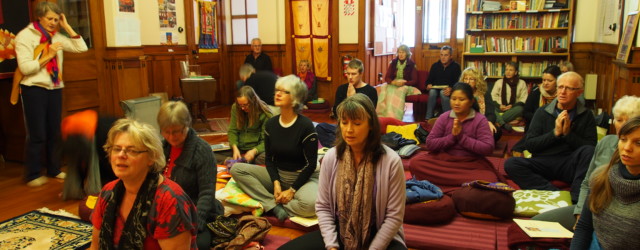
30-minute group silent sit at the Centre

In Person
Chenrezig
Wednesday · 5:30 – 6:30pm · 10 Herschell St, Napier

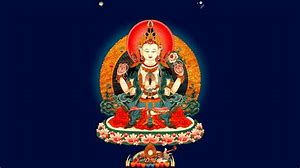
Chenrezig Sadhana

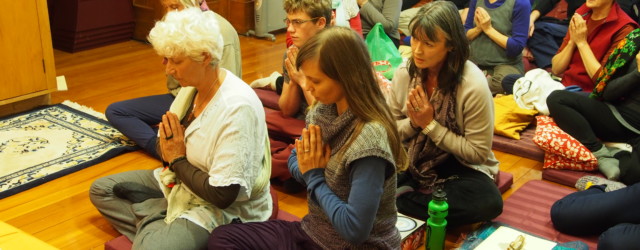
A chanting meditation on compassion with visualisation and mantra recitation

In Person
White Tara
Friday · 5:30pm · 10 Herschell St, Napier

White Tara Sadhana

The Uncommon White Tara Sadhana, Moon Current River — mantra recitation and special visualisations of the Six Domes of Light. For initiates only

Initiates Only
Ngondro
Saturday · 10:00 – 11:15am · 10 Herschell St, Napier

Ngöndro Practice

Foundational preliminary practices of Tibetan Buddhism

In Person
Calm Abiding
Saturday · 11:30am – 12:10pm · 10 Herschell St, Napier

Calm Abiding Meditation

30-minute group silent sit at the Centre

In Person
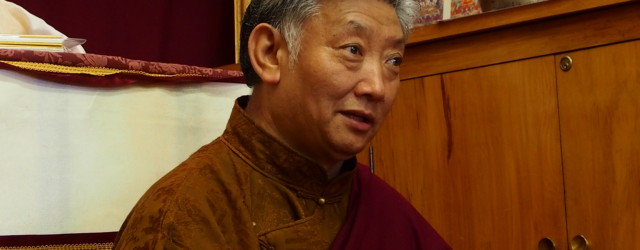
Lama Choedak Rinpoche

Spiritual Director

Lama Choedak
Rinpoche

Born in Tibet, Lama Choedak Rinpoche received his early training under the close guidance of his spiritual mentor, His Eminence Chogye Trichen Rinpoche, one of the most revered masters of the Sakya tradition. As a young refugee in Nepal, he undertook twelve years of rigorous monastic education before completing a three-and-a-half-year solitary Lamdré retreat in Lumbini, sponsored by His Holiness the Dalai Lama.

Based in Australia, he has founded numerous Buddhist centres throughout Australasia and continues to travel internationally, offering teachings, empowerments, and retreats to students from many cultures and backgrounds.

About Phuntsok Choeling

Our history, our place, and our purpose

About Our Centre

Phuntsok Choeling Buddhist Centre is a welcoming community dedicated to sharing the authentic wisdom, compassion, and meditation practices of the Sakya tradition of Tibetan Buddhism, located at 10 Herschell Street, Napier, Hawke's Bay.

Phuntsok Choeling was founded by a local group of practitioners who gathered together to share their interest in Buddhism. The Centre received its name and blessing from His Eminence Chogye Trichen Rinpoche — root teacher of our Spiritual Director, Lama Choedak Rinpoche — during a rare, one-time visit to Hawke's Bay in 2001. Phuntsok Choeling means "Place of Spiritual Abundance."

Lama Choedak Rinpoche has provided ongoing spiritual guidance to our community since the Centre's founding. As a registered New Zealand charitable trust, Phuntsok Choeling is entirely supported by donations, memberships, and course and retreat fees, and is run with generosity and dedication by a team of committed volunteers.

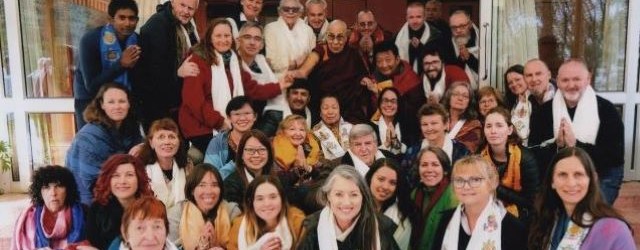
Although Lama Choedak Rinpoche resides in Australia, he visits New Zealand regularly to offer teachings and retreats, while our facilitators — long-term students of Rinpoche — lead our regular classes, meditation sessions, and courses here in Napier. Members of our small community have also been fortunate to join Rinpoche on pilgrimage to sacred Buddhist sites in Nepal, India, and Tibet.

Phuntsok Choeling Buddhist Centre, 10 Herschell Street, Napier
"The real Dharma is within our own mental continuum. Temples and statues are supports, but the true Dharma must arise in our own mind."— His Holiness Sakya Gongma Trichen Rinpoche

Our instructors and facilitators have studied, practised, and received teachings from respected masters of the Sakya tradition. They are committed to presenting these timeless teachings in a way that is relevant and accessible to modern life. We warmly invite you to visit our Centre, attend a class or meditation session, or simply connect with our community.

What is Buddhism?

Buddhism is one of the world's great wisdom traditions, originating in ancient India approximately 2,500 years ago. Its founder, Siddhartha Gautama — the historical Buddha — discovered through direct experience that human suffering arises from ignorance of the true nature of mind and reality, and that through practice and insight, complete liberation is possible.

Buddhism is not a religion requiring blind faith, but a practical path of investigation and transformation. Rather than asking us to simply accept his teachings, the Buddha encouraged us to investigate our own experience and discover for ourselves the causes of suffering and the path to genuine freedom.

Three Essential Trainings

Shila

Ethical Conduct

Being mindful of our thoughts, words, and actions — acting with kindness, honesty, generosity, and compassion to reduce harm.

Samadhi

Meditation

Calming the restless mind through practices such as Calm Abiding (Shamatha), cultivating stability, mindfulness, and insight.

Prajna

Wisdom

The deep understanding of the true nature of ourselves and reality, loosening attachment to fixed, self-centred habits.

The Buddhist Teachings

Following the Buddha's passing, his teachings were preserved and transmitted orally before being compiled into the Tripitaka, or Three Baskets: the Sutra (discourses of the Buddha), the Vinaya (ethical guidelines), and the Abhidharma (philosophical teachings on the nature of mind). Alongside these are the Tantras, containing the Vajrayana teachings.

The Three Vehicles

The Buddha's teachings are traditionally presented as three complementary paths, or Vehicles (Yanas):

Foundational

Pratimokshayana

Emphasises ethical living, meditation, and wisdom as the means to attain liberation, beginning with taking Refuge in the Buddha, Dharma, and Sangha.

Great Vehicle

Mahayana

Expands the path by cultivating bodhicitta — the aspiration to attain enlightenment for the benefit of all beings.

Diamond Vehicle

Vajrayana

Builds on the Mahayana through profound meditation methods transmitted through an authentic lineage, entered through empowerment from a qualified teacher.

Although described as three vehicles, they are not competing paths, but a progressive unfolding of the Buddha's teachings guiding practitioners towards the same goal: complete awakening for the benefit of all beings.

The Life of the Buddha

Siddhartha Gautama was born approximately 563 BCE in Lumbini (in present-day Nepal) into the Shakya royal clan. His mother, Queen Mahamaya, gave birth to him beneath a sal tree in the garden of Lumbini Grove. Brahmin soothsayers prophesied that the child would either become a great universal monarch or — if he encountered suffering — a fully enlightened Buddha who would guide humanity.

His father, King Suddhodana, fearful of the latter prophecy, surrounded the young prince with every pleasure and comfort, shielding him from any sight of suffering. Siddhartha was raised in luxury, received the finest education, and married the beautiful Princess Yasodhara, with whom he had a son named Rahula.

The Four Sights

At the age of twenty-nine, Siddhartha ventured outside the palace and encountered what are known as the "Four Sights" that would change everything: an old man, a sick person, a corpse being carried to cremation, and finally a wandering ascetic seated in calm meditation. These encounters shattered his sheltered existence and kindled the profound question of how to be free from suffering.

That very night, Siddhartha made the Great Renunciation — leaving the palace, his wife, son, and royal inheritance — to search for the truth that could liberate all beings from suffering.

The Search for Enlightenment

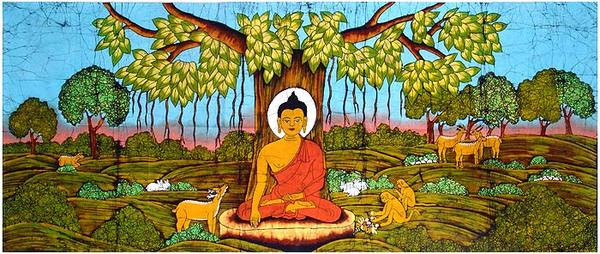
For six years, Siddhartha studied under the greatest meditation masters of his day and practised extreme austerities, nearly starving himself to death. Realising that neither extreme — luxurious indulgence nor harsh asceticism — led to liberation, he accepted milk-rice from a village girl named Sujata, recovered his strength, and resolved to sit beneath a great Bodhi tree at Bodhgaya and not rise until he had found the truth.

After forty-nine days of deep meditation, during the full moon night of the month of Vesak, Siddhartha Gautama attained complete and perfect enlightenment — Buddhahood. He saw directly into the nature of reality, the process of dependent origination, and the causes of suffering and liberation. He became the Shakyamuni Buddha — the "Sage of the Shakyas."

"Hatred is never appeased by hatred in this world. It is appeased only by love. This is an eternal law."— The Dhammapada · Shakyamuni Buddha

The First Teaching & Passing

The Buddha spent the next forty-five years walking throughout northern India sharing his realisation. His first teaching — the First Turning of the Wheel of Dharma — was given at Deer Park in Sarnath to the five ascetics who had previously been his companions. These teachings became the foundation of the Buddhist path: the Four Noble Truths and the Eightfold Path.

At the age of eighty, the Buddha passed into Parinirvana at Kushinagar. His final words to his disciples were: "All compounded things are impermanent. Work out your salvation with diligence." His teachings, preserved and transmitted through an unbroken lineage, continue to transform lives to this day.

The Sakya Tradition

The Sakya school is one of the four major traditions of Tibetan Buddhism, alongside Nyingma, Kagyu, and Gelug. Its name derives from Sakya Monastery, founded in 1073 by Khön Könchok Gyalpo in the pale grey earth (sa skya) of the Tsang region of southern Tibet. Khön Könchok Gyalpo belonged to the Khön clan, one of Tibet's oldest noble families, whose ancestors are said to have received teachings directly from Padmasambhava during Buddhism's first flowering in Tibet in the eighth century. From that founding to the present day, leadership of the Sakya order has passed down an unbroken hereditary line within the Khön family — a continuity almost unique among the great schools of Tibetan Buddhism.

The Lamdré — Path with Its Result

The crown jewel of Sakya teaching is the Lamdré (Lam 'bras) — "the Path with Its Result" — received in vision by Sachen Kunga Nyingpo, the first of the Five Sakya Forefathers, from the Indian mahasiddha Virupa. Rather than treating the path and the goal of enlightenment as separate, Lamdré holds that the result is already contained within the path itself, when practised correctly. It is a complete system of sutra and tantra practice, said to contain the entire path to enlightenment within a single teaching cycle.

This teaching, and the scholarship and meditative accomplishment of the Five Forefathers who followed Sachen Kunga Nyingpo — his sons Sonam Tsemo and Drakpa Gyaltsen, his grandson Sakya Pandita Kunga Gyaltsen (1182–1251), and Sakya Pandita's own nephew, Chögyal Phagpa (1235–1280) — laid the intellectual and spiritual foundation the tradition still rests on today. Sakya Pandita became one of the most celebrated scholar-saints in Tibetan history, and in 1244 was summoned by Godan Khan, grandson of Genghis Khan, to the Mongol court — the beginning of a relationship between the Sakya throne holders and the Mongol Empire that would shape Tibetan history. Chögyal Phagpa continued this connection as Imperial Preceptor to Kublai Khan, and was granted temporal authority over Tibet in return — making the Sakya hierarchs, for roughly a century, both the spiritual and political leaders of their homeland.

Political authority eventually passed to other hands in the mid-fourteenth century, but the Sakya tradition's spiritual authority never wavered. Over the centuries that followed, the Lamdré transmission flowed onward through the Khön family and gave rise to distinct streams of practice and scholarship within the wider tradition — most notably the Ngor tradition, founded by Ngorchen Kunga Zangpo in 1429, and the Tsarpa tradition, founded by Tsarchen Losal Gyatso in the sixteenth century. It is through this Tsarpa lineage — carried by His Eminence Chogye Trichen Rinpoche and, in turn, by our own Spiritual Director, Lama Choedak Rinpoche, under his training — that the teachings and practices at Phuntsok Choeling descend.

The Sakya tradition is renowned for its "scholar-practitioner" ideal — the seamless integration of rigorous philosophical study with deep meditative practice. Its curriculum includes comprehensive training in the five major sciences (Buddhist philosophy, logic, grammar, medicine, and crafts) as well as the full range of tantric practices.

The twentieth century brought profound upheaval: following the Chinese invasion of Tibet, the Khön family fled into exile in 1959, and the Sakya order's entire monastic and institutional life had to be rebuilt from almost nothing on Indian soil. That the tradition not only survived this rupture but has since spread to Dharma centres across the world — including our own, here in Hawke's Bay — is a testament to the resilience of the teachers who carried it forward. Today, the Sakya tradition stands as one of the four principal schools of Tibetan Buddhism, still guided by an unbroken lineage of Khön family throne holders, and still transmitting the Lamdré exactly as it has been passed, teacher to student, for nearly a thousand years. To learn more about the individual masters of this living lineage, including our own Spiritual Director, see our Lineage page.

Our Lineage Masters

Biographies of the Sakya Throne Holders and our Spiritual Director

Our Lineage Masters

The teachers below represent the living continuation of the Sakya lineage, from the current and recent Sakya throne holders through to our own Spiritual Director. For the history of the Sakya tradition itself, see About Our Centre → The Sakya Tradition.

His Holiness the 41st Sakya Trizin

His Holiness the 41st Sakya Trizin

Kyabgon Gongma Trichen Rinpoche (b. 1945)

His Holiness Ngawang Kunga was born in Tsedong, Tibet, in 1945. He began intensive religious study at the age of five, and in 1952 — still a small child — was formally recognised by His Holiness the 14th Dalai Lama as the next Sakya Trizin, the throne holder of the Khön family lineage that has guided the Sakya tradition for nearly a thousand years. He trained closely under his root teacher, Ngawang Lodroe Shenpen Nyingpo, and other senior scholars of the tradition, and was formally enthroned as head of the Sakya Order in 1959, at just fourteen years old.

That same year, following the Chinese invasion of Tibet, His Holiness fled into exile with his family and many monks of the Sakya Monastery, eventually settling in India. There, he undertook the extraordinary task of re-establishing the Sakya seat from nothing — building the Sakya Centre monastery in Rajpur, and going on to found and guide a wide network of institutions, including the Sakya Institute, Sakya College, Sakya Nunnery, Sakya Tibetan Settlement, and Sakya Hospital, alongside numerous monasteries and Dharma centres across the world.

Widely regarded as second only to the Dalai Lama in the spiritual hierarchy of Tibetan Buddhism, and respected by all four schools, His Holiness has bestowed the extensive Lamdré teaching cycle — the most important transmission of the Sakya Order — many times across the world, passing it to hundreds of lineage holders in the next generation of teachers. In March 2017, after nearly seven decades as throne holder, he passed the responsibility to his elder son, His Holiness Ratna Vajra Rinpoche, the 42nd Sakya Trizin, and is now known as Kyabgon Gongma Trichen Rinpoche.

His Holiness the 42nd Sakya Trizin

His Holiness the 42nd Sakya Trizin

Ratna Vajra Rinpoche (b. 1974)

His Holiness Ratna Vajra Rinpoche, eldest son of the 41st Sakya Trizin, was born in Dehradun, India, in 1974. His formal education began at just six years old, under the tutorship of Venerable Rinchen Sangpo, and by twelve he had already passed his first major examination at the Sakya Centre. He went on to study Buddhist philosophy at Sakya College, and in 1998 completed his training with the Kachupa degree — "master of ten scriptures."

Alongside his father, Rinpoche received extensive teachings, empowerments, and transmissions from many of the most accomplished masters of his generation, including His Holiness the 14th Dalai Lama and His Eminence Chogye Trichen Rinpoche. From an early age he undertook rigorous meditation retreats, including the complete Hevajra retreat — a required foundation for bestowing the Lamdré empowerments himself. He first gave the Lamdré teachings at the Sakya Centre in 2005, and has since taught it at Ngor Monastery and, in 2013, for the first time outside India, in Singapore.

His Holiness Ratna Vajra Rinpoche was enthroned as the 42nd Sakya Trizin on 9 March 2017 — the first throne holder installed under the rotating succession system adopted by the Sakya order. He held the throne until March 2022, when it passed to his younger brother, and continues to teach and travel widely across Asia, Europe, and North America, including throughout Australia and New Zealand.

His Holiness the 43rd Sakya Trizin

His Holiness the 43rd Sakya Trizin

Gyana Vajra Rinpoche (b. 1979)

His Holiness Gyana Vajra Rinpoche, younger son of the 41st Sakya Trizin, was born in Dehradun, India, in 1979. He began reading and writing Tibetan at the age of four, and his early years were dedicated — under the guidance of his father and Venerable Rinchen Sangpo — to the study of religious texts, prayer, and ritual. He went on to train at the Sakya Centre before pursuing higher philosophical studies at Sakya College, receiving along the way many of the tradition's major initiations and transmissions, including the profound Lamdré teachings, from his father and other eminent masters of his generation, among them His Holiness the 14th Dalai Lama and His Eminence Chogye Trichen Rinpoche.

Fluent in English, Tibetan, and Hindi, Rinpoche is known for a direct, approachable teaching style that has made him particularly effective in reaching Western students. For many years he assisted his father on teaching tours through India and abroad, before establishing his own regular programme of teachings and empowerments across the Americas, Europe, Asia, and Australia.

His Holiness Gyana Vajra Rinpoche was enthroned as the 43rd Sakya Trizin on 16 March 2022, holding the throne under the Sakya order's rotating succession system. Alongside his teaching work, he is known for his role in the Sakya Academy Project.

Since 2014, the Sakya Trizin throne rotates every three years among senior members of the Khön family — the highest Vajrayana and Lamdré teachings of the Sakya tradition remain the preserve of these throne holders.

His Eminence Chogye Trichen Rinpoche

His Eminence Chogye Trichen Rinpoche

Head of the Tsarpa Sub-lineage of the Sakya Tradition (1920–2007)

His Eminence Chogye Trichen Rinpoche was one of the most revered Sakya masters of the twentieth century. He was born in Tsang, central Tibet, in 1920, and was recognised as the reincarnation of the previous Chogye Trichen. He held the throne of the Tsarpa sub-lineage — one of the three principal Sakya sub-schools — and was widely regarded as one of the most senior Sakya lamas of his time.

Following the Chinese invasion of Tibet, Rinpoche went into exile, eventually settling in Nepal, where he founded monasteries in Lumbini and Kathmandu (Boudhanath). He was a renowned tantric master, scholar, and holder of the Lamdré, and was regarded as a teacher of teachers — his own disciples included His Holiness the Dalai Lama and His Holiness the Sakya Trizin.

Chogye Trichen Rinpoche was the root teacher of Lama Choedak Rinpoche, and it was he who conferred upon Lama Choedak the Tsarpa Lochen title. He passed away in Kathmandu in January 2007.

Lama Choedak Rinpoche

Lama Choedak Rinpoche

Spiritual Director · Phuntsok Choeling

Phuntsok Choeling Buddhist Centre is honoured to be under the spiritual guidance of Lama Choedak Rinpoche, a highly respected teacher, translator, scholar, and lineage holder of the Sakya tradition of Tibetan Buddhism.

Lama Choedak Rinpoche was born in Tibet in 1945. In the early 1960s, he escaped Tibet with his family and settled in Nepal, where he completed his secondary education, becoming one of the first Tibetan refugees to complete schooling within the Nepalese education system. While still a young man, he entered the Buddhist monastic life and became a student of His Eminence Chogye Trichen Rinpoche, one of the great masters of the Sakya tradition. Under his guidance, Rinpoche undertook twelve years of rigorous monastic training and remained closely connected to his teacher, including serving as his attendant for a number of years.

From 1976 to 1980, sponsored by His Holiness the Dalai Lama, Rinpoche undertook and completed a traditional three-and-a-half-year solitary Lamdré (Path and Result) meditation retreat in Lumbini, Nepal. The retreat formed a profound foundation for his subsequent life of teaching and practice. During this period of intensive training, he completed the extensive preliminary practices associated with the Lamdré tradition.

Following his years of monastic training and retreat, Lama Choedak Rinpoche began sharing the Dharma beyond the Tibetan community. He developed a particular aptitude for the English language through his encounters with Western pilgrims visiting Lumbini and went on to work as a translator and interpreter for some of the most important teachers of Tibetan Buddhism. He translated for eminent masters from all four major traditions of Tibetan Buddhism, including the late tutors of His Holiness the Dalai Lama. Encouraged by teachers including Lama Yeshe to help make the Buddhadharma accessible in the West, Rinpoche began teaching and translating internationally and spent part of the early 1980s in New Zealand.

Rinpoche's translation and scholarly work has included important Buddhist texts such as works by Rongton Sheja Kunrig on the Mahayanasutralankara and the Perfection of Wisdom, as well as Kamalashila's Stages of Meditation. He has continued throughout his life to combine the preservation of traditional Buddhist teachings with a practical understanding of how those teachings can be communicated to contemporary students.

In the late 1980s, Rinpoche settled in Canberra, Australia, where he undertook postgraduate study at the Australian National University. As one of the few Tibetan Buddhist teachers then living in Australia, he soon began attracting students and establishing a growing community of practitioners.

In 1989, Rinpoche founded Sakya Losal Choe Dzong (SLCD), the Tibetan Buddhist Society of Canberra. The Society was formally launched and blessed by His Holiness the 41st Sakya Trizin and became one of the established Tibetan Buddhist centres in Australia. Rinpoche subsequently founded and supported Buddhist centres throughout Australia and New Zealand, establishing a broad network through which the teachings of the Sakya tradition could be preserved and made accessible to Western students.

In 1996, His Eminence Chogye Trichen Rinpoche visited Australia and launched the Rongton Buddhist College in Evatt, Canberra. The College was established to provide a foundation for the systematic study and practice of Tibetan Buddhism, reflecting Lama Choedak Rinpoche's longstanding commitment to combining Buddhist study with meditation and practical application.

Rinpoche has also devoted much of his teaching life to making meditation accessible to contemporary Western practitioners. From the mid-1990s he began conducting regular Calm Abiding Meditation courses and residential retreats, presenting the traditional Buddhist practice of Shamatha in a clear and practical way while maintaining its connection to its authentic Buddhist origins. His approach has helped many students develop a sustained meditation practice and understand how Buddhist principles can be integrated into everyday life.

During His Eminence Chogye Trichen Rinpoche's extensive visit to Australia and New Zealand in 2001, Lama Choedak Rinpoche was honoured with the title Tsarpa Lochen, in recognition of his dedicated work in Australia and his efforts to preserve and promote the Tsarpa tradition of the Sakya lineage.

It was also in 2001 that His Eminence Chogye Trichen Rinpoche made a rare visit to Hawke's Bay, where he gave his blessing and the name Phuntsok Choeling to the local group of practitioners who had come together through their shared interest in Buddhism. Since its founding, Phuntsok Choeling has remained under the spiritual guidance of Lama Choedak Rinpoche. He has continued to visit New Zealand regularly to offer teachings, empowerments and retreats, while long-term students and facilitators lead the Centre's regular classes, meditation sessions and practices.

Over the following decades, Lama Choedak Rinpoche continued to teach extensively throughout Australia, New Zealand and internationally, offering teachings, empowerments, meditation retreats and guidance to students from many different cultures and backgrounds. He has founded or supported numerous Buddhist centres throughout Australasia and established the Rongton Buddhist Training College as an important centre for Buddhist education. Since 2001, he has also trained students to facilitate Calm Abiding Meditation programmes throughout Australia and New Zealand.

Lama Choedak Rinpoche is renowned for presenting profound Buddhist teachings in a clear, practical and compassionate manner. Drawing on decades of study, meditation, teaching and lived experience, he has a particular ability to explain traditional Buddhist teachings in ways that are relevant to contemporary life. His approach emphasises the integration of meditation, wisdom and compassion, encouraging students to bring the Dharma into their everyday lives.

In recent years, Lama Choedak Rinpoche's teachings have also reached an increasingly wide international audience through the work of Sakya Friends, an online initiative based in Australia. Thousands of students and interested practitioners around the world have connected with his teachings through live Zoom broadcasts and YouTube, with teachings made accessible through simultaneous translation into multiple languages. His ability to communicate profound Buddhist principles in a practical, humorous and deeply human way has resonated with people from many different backgrounds and cultures. His teachings are appreciated not only for their depth and clarity, but also for the warmth, humour and heartfelt quality with which he brings the Dharma into the realities of everyday life.

Through Rinpoche's guidance, the Phuntsok Choeling community practises Calm Abiding (Shamatha) meditation, Chenrezig and White Tara sadhanas, and receives teachings and transmissions during his regular visits to New Zealand. Members of the community have also been fortunate to accompany Rinpoche on pilgrimage to sacred Buddhist sites throughout Nepal, India and Tibet.

A significant recent milestone in Rinpoche's decades of Dharma activity in Australia was the opening of the Sakya Temple of Peace in Kambah, Australian Capital Territory, in March 2026. The purpose-built temple represents the culmination of many years of dedication to establishing and nurturing the Buddhadharma in Australasia. The temple was formally inaugurated in a ceremony attended by distinguished guests, including the Australian Federal Minister for Finance, and was consecrated by His Holiness the 43rd Sakya Trizin.

Lama Choedak Rinpoche's published works include Adamantine Joy, Taming the Elephant Mind, Healing Relationships, Balancing Wisdom and Compassion, Meditation on White Tara, Original Virtue, and Lamdré: Dawn of Enlightenment. He has also translated important Sakya texts, including Clear Lamp on the Path of Liberation by Lama Ngaklo Rinpoche and Triple Tantra, Panchen Ngawang Choedak's Lamdré Tsogshe teaching.

For more than four decades, Lama Choedak Rinpoche has dedicated his life to preserving, practising and sharing the authentic teachings of the Buddha. Through his teaching, translation, scholarship and the many communities he has established and guided, he continues to make the Dharma accessible to students throughout Australasia and internationally.

Events, Courses & Retreats

Our calendar of upcoming programmes — all are welcome

Confirmed dates for our next teachings, retreats, and courses. For anything not yet listed, please get in touch — or check back as more dates are confirmed.

Ngondro and Medicine Buddha Retreat
Friday 5 – Sunday 7 September · 10 Herschell St, Napier

Ngöndro & Medicine Buddha Retreat with Lama Choedak Rinpoche

A 3-day retreat including Ngöndro practice and Medicine Buddha empowerment and teachings. Click for full details.

Ngöndro Practice
Ngöndro, meaning "preliminary practice," provides a profound foundation for the Buddhist path. Through the practices of renunciation, refuge, bodhicitta, purification, accumulation of merit, and devotion, we develop the conditions for genuine transformation and realisation. During this retreat, Lama Choedak Rinpoche will share his lifetime of knowledge and experience, guiding us through the essential principles and practices of Ngöndro.

Medicine Buddha Empowerment & Teachings
Rinpoche will also bestow the Medicine Buddha empowerment and give teachings on this profound practice for healing, purification, and the alleviation of suffering.

This retreat offers a precious opportunity to receive both the foundational practices of Ngöndro and the empowerment and teachings of Medicine Buddha directly from Rinpoche. Participants are welcome to attend both the Ngöndro and Medicine Buddha teachings, or to attend either programme separately.

Retreat Cost: $300 non-members / $270 members
Early Bird (before 21 August): $280 non-members / $250 members
Daily attendance: $100 per day
Virtual Zoom attendance: $50 per day

Venue: 10 Herschell Street, Napier
Dates: Friday 5 – Sunday 7 September
Please contact us at phuntsok.choeling@gmail.com or call 022 370 9697 to register.

Retreat
Halloween Soor Practice
Friday 31 October · 3:00pm · Twyford

Halloween Soor Practice

A healing outdoor fire practice offering blessings and guidance to those who have passed. Click for full details.

Soor is performed on behalf of the deceased and those they leave behind, offering blessings and guidance through the recitation of the 35 Buddhas' Confession Sutra. The practice takes about an hour and is held outdoors, undercover, around a small fire with rising smoke — a simple and deeply healing ritual.

You are welcome to bring the names of loved ones who have recently passed, or email them to the Centre ahead of time.

Venue: Twyford
Date: Friday 31 October, 3:00pm
Please contact us at phuntsok.choeling@gmail.com or call 022 370 9697 for the exact address and to send names in advance.

Practice
Tukituki Calm Abiding Retreat
Friday 20 – Monday 23 November · Tukituki Christian Camp, Haumoana

Tukituki Calm Abiding Meditation Retreat

A residential retreat in Calm Abiding meditation, suitable for beginners and experienced meditators alike. Click for full details.

Going on retreat is a precious opportunity to reconnect with the peace and clarity that are our true nature. Through the practice of Calm Abiding (Shamatha) meditation, combined with mindful living in a simple, supportive environment, we gently quiet the restless activity of the mind and rediscover its natural calm.

Suitable for both beginners and experienced meditators, the main emphasis is on Calm Abiding meditation, supported by gentle analytical reflection, elements of insight meditation, and mindful daily activities. Participants may choose to attend from one day up to the full retreat.

Facilitators: Clare Woodham and Wolfgang Greve — long-standing meditation practitioners and students of Lama Choedak Rinpoche.

Where: Tukituki Christian Camp, 70 Moore Road, Haumoana
When: Friday 20 – Monday 23 November (arrival from 4:00pm Friday, concluding 2:00pm Monday)
Cost: $70 per day residential (shared bunk-room accommodation & meals) / $55 per day non-residential (meals included)

Payment: Phuntsok Choeling Buddhist Centre, 38-9005-0618097-00 — reference your name + TT-Retreat
Please contact us at phuntsok.choeling@gmail.com or call 022 370 9697 to register.

Retreat

Dates for our next Day of Meditation will be added here once confirmed. Contact us at phuntsok.choeling@gmail.com or call 022 370 9697 to register your interest.

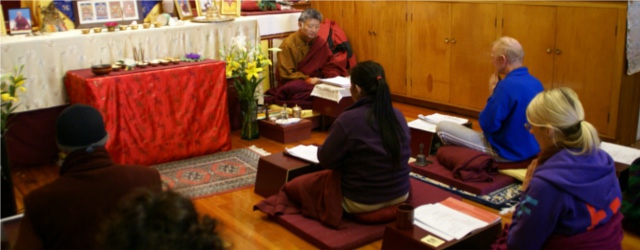
Our regular programme includes meditation, sadhana, and devotional practices held throughout the week, both online and in person — all are welcome to join us.

Weekly

Calm Abiding Zoom
Daily except Sunday · 6:30 – 7:00am · Zoom

Morning Calm Abiding Meditation on Zoom

Led by Wolfgang — a quiet, reflective way to begin the day

Online
Calm Abiding
Monday · 5:30 – 7:10pm · 10 Herschell St, Napier

Calm Abiding Meditation

30-minute group silent sit at the Centre

In Person
Tara Dance
Wednesday · 10:30 – 11:30am · 10 Herschell St, Napier

Tara Dances

Dances for protection, healing, long life, wisdom, compassion, and power — led by Clare Woodham (TaraDhatu)

In Person
Chenrezig
Wednesday · 5:30 – 6:30pm · 10 Herschell St, Napier

Chenrezig Sadhana

Chenrezig Mahakaruna and Mahamudra Sadhana — a chanting meditation on compassion with visualisation and mantra recitation

In Person
Calm Abiding
Wednesday · 6:30 – 7:10pm · 10 Herschell St, Napier

Calm Abiding Meditation

30-minute group silent sit at the Centre

In Person
White Tara
Friday · 5:30pm · 10 Herschell St, Napier

White Tara Sadhana

The Uncommon White Tara Sadhana, Moon Current River — mantra recitation and special visualisations of the Six Domes of Light. For initiates only

Initiates Only